How to Pass in Practical Basketball
Chest, bounce, fake, and swing passes that keep early-access park possessions alive.
Passing is the fastest way to win Practical Basketball stress-test games without chasing highlight reels. Practical’s Physics V2 punishes lazy chest passes into closed lanes and rewards players who read help rotations before the ball leaves their hands. This guide covers every confirmed PC pass input, when to kick out, how fake passes create driving lanes, and how playmaking attributes from your build translate into clean assists during early-access windows.
Keep PC Controls open as your bind reference. Pair passing with How to Dribble for setup, How to Defend so you know what defenders are trying to take away, and How to Alley-Oop when a lob beats a bounce pass. New players should skim Getting Started for park flow before drilling the triangle below.
Confirmed PC pass inputs
Teammate passing uses number keys 1–4 mapped to receiver slots. Modifier keys change pass type without changing your target.
| Pass type | PC input | Best use |
|---|---|---|
| Standard pass | 1–4 | Open cutter on a straight line |
| Bounce pass | Double-tap 1–4 | Defender sitting in the chest-pass lane |
| Chest pass | Shift + 1–4 | Fastest delivery when the window is brief |
| Flashy pass | Shift + double-tap 1–4 | Style delivery when the lane is open and you need to sell velocity |
| Fake pass | Q + number | Sell a pass, keep the ball, shift help |
| Swing pass R | Hold D + 1–4 | Skip weak-side from the right side of the court |
| Swing pass L | Hold A + 1–4 | Skip weak-side from the left side of the court |
| Bounce swing R | Hold D + double-tap 1–4 | Low skip under help from the right side |
| Bounce swing L | Hold A + double-tap 1–4 | Low skip under help from the left side |
| Teammate alley-oop | T + number | Cutter with runway and vertical |
| Self alley-oop | F | Open lane after you beat your man |
Swing passes are directional skips that move the ball from one side of the floor to the other without a full dribble reset. Hold A or D to declare direction, then press the receiver number for a chest-style swing, or double-tap the number for a bounce swing that slides under late help. They punish zone-heavy teams and recovering defenders who overshift to the ball — but only when spacing already opened the weak-side window. If your teammate is standing in the dunker’s path or the skip lane is occupied, a swing pass becomes a turnover; default back to chest or bounce until you can read the floor in one beat. Practice swings in Public Gym with a stationary friend before you attempt them in crowded Park chat.
Spacing before the pass
Stress-test lobbies collapse on the ball handler within two dribbles if teammates stand too close. Good spacing means:
- Corners filled when the ball is on the wing
- Weak-side dunker spot occupied when the strong-side drive starts
- No standing in the dunker’s path after a cut
When you drive and two defenders meet you, the kick-out is already open — you just need to see it. Practice calling “corner” or “slot” in voice chat during Park Modes so receivers drift before you pick up the ball.
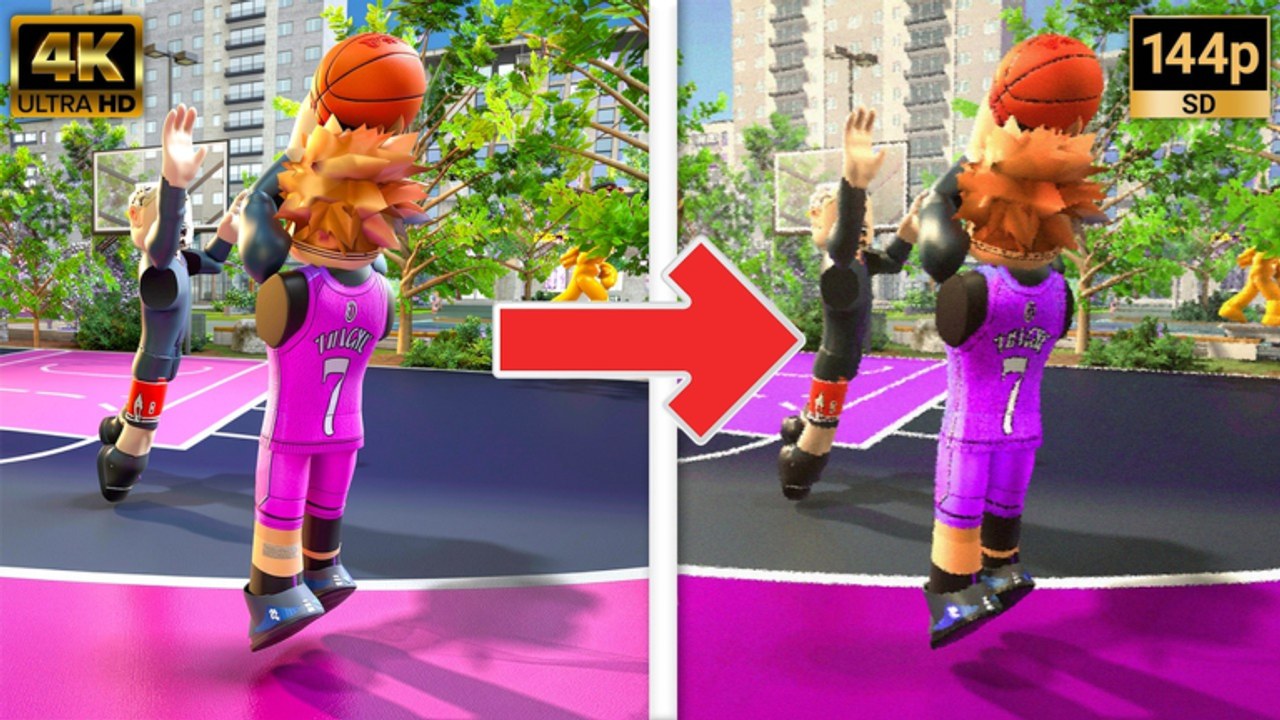
The embedded video mid-article demonstrates passing reads and modifier timing in park context — watch after you memorize the bind table above, then drill the same looks in Public Gym.
Bounce pass versus chest pass
Chest passes (Shift + 1–4) are fastest. Use them when a teammate is breaking toward the rim and the lane is clear for a split second.
Bounce passes (double-tap 1–4) arc under outstretched hands. Use them when:
- A help defender sits between you and the target
- You are passing into the post from the wing
- The receiver is cutting through traffic near the paint
If a pass keeps getting tipped, you are probably chest-passing into a closed window. Switch to bounce or wait one beat for the cutter to clear.
Fake passes and playmaking reads
Q + number sells a pass without releasing the ball. Fake passes work when:
- Help is loading the paint on your drive
- A corner defender cheats off a shooter to tag you
- You want to freeze a post defender before an entry pass
After the fake, either attack the opened lane yourself or hit the real target with 1–4 or Shift + 1–4. Do not spam fakes without a follow-up — stationary ball handlers get stripped in crowded park games.
Playmaker archetypes on the Archetypes Hub lean on pass accuracy and vision badges. Even a scoring build should invest enough pass accuracy to complete kick-outs; compare Scoring Builds and Two-Way Builds for how much playmaking each template carries without sacrificing primary scoring.
Alley setup versus skip pass
Not every highlight is a lob. Before you press T + number, ask:
- Is the cutter moving toward the rim with space?
- Does your teammate have dunk attributes for the finish?
- Are two defenders already under the basket?
If the lob lane is closed but the weak-side corner is open, skip with a chest pass instead of forcing T. Self lobs with F belong in the same category — punishment for overhelping defense, not a default move. Full timing notes live in How to Alley-Oop.
Common turnovers and fixes
| Turnover | Likely cause | Fix |
|---|---|---|
| Pass hits defender’s hands | Chest into closed lane | Double-tap bounce or delay the throw |
| Alley sails out of bounds | Late lob or bad cutter angle | Lead the cut; read alley guide |
| Strip on fake pass spam | No follow-up drive or pass | Fake once, then commit |
| Receiver “not open” | Bad spacing | Reset on the perimeter; see Getting Started |
| Pass into post stolen | Telegraph entry | Fake with Q, bounce from wing |
Turnovers in stress tests snowball because there is no guaranteed possession reset. One bad pass often becomes a transition dunk on the other end — study How to Defend so you understand what the defense is hunting.
Playmaking attributes and badges
Pass accuracy gates how often passes arrive on target under light contest. Ball handle matters less for passing than for How to Dribble, but you still need enough handle to reach the paint without picking up your dribble early.
During early-access windows, badge names and thresholds can shift. Re-check Takeovers & Badges after patch notes if your passes suddenly feel slower or less accurate. Template attribute spreads for guards and forwards appear in How to Create a Build.
Practice drills (15 minutes)
- Triangle passing — three spots: wing, corner, top. Cycle 1–4, bounce double-tap, and Shift + 1–4 without moving your feet.
- Help-kick drill — one defender loads the ball; passer drives one dribble and kicks to the open corner.
- Fake into drive — Q + number, then attack the gap the helper left.
- Alley-or-skip decision — cutter runs; passer chooses T + number or chest skip based on paint traffic.
- Live park rep — queue Park Modes and track assists versus turnovers for one session.
Use the Controls Cheat Sheet if you forget a bind mid-game. Return to the Guides Hub when you are ready to add Post Moves or refine shooting after the kick-out.
Passing wins stress-test games because it scales — one patient playmaker makes four teammates better without maxing every scoring badge. Read the floor, pick the right pass type, and let Physics V2 do the rest.
Frequently Asked Questions
Quick answers players ask before every park session.
How do I bounce pass in Practical Basketball on PC?
Double-tap the teammate number key (1–4). Use bounce passes when a defender sits in the chest-pass lane or when throwing into post traffic.
What is a fake pass and when should I use it?
Press Q plus the receiver number to sell a pass without releasing the ball. Use it when help collapses on your drive or a corner defender cheats toward you, then attack or hit the real target.
When should I throw an alley-oop instead of a regular pass?
Use T plus the receiver number when a cutter has runway, space under the rim, and enough dunk attributes. If two defenders pack the paint, skip with a chest or bounce pass instead.
Which build stats help passing most?
Pass accuracy is the core stat for on-target delivery. Enough ball handle to reach the paint matters too. Playmaker archetypes on the Archetypes Hub prioritize vision badges alongside accuracy.
Why do my passes keep getting stolen in park?
Usually chest passes into closed lanes, bad spacing, or fake-pass spam without a follow-up. Switch to bounce passes, fix teammate spacing, and read How to Defend to see what opponents are jumping.